


28/05/2026
10:20


“Killing someone’s hope is an act of cruelty!”
“Connection is not necessarily about bloodlines, and kindness is not merely about feeding hunger. The conversation between Dương Đỗ and Đồng Lan at LOXO will change the way you perceive boundaries in life: Between ‘being embraced’ and ‘being confined’, between ‘planting seeds’ and ‘channeling flow’. An article for those who are searching for an aesthetic standard to guide people making bold life decisions.
Being embraced or being confined?
In a dialogue, sometimes the value does not lie in the answers, but in how two souls “collide” with the same symbol yet give birth to two entirely different worldviews. Dương Đỗ and singer Đồng Lan began their discussion with a strip of silk—something as soft as an embrace, yet also tightly enclosing in the MV “Nếu Anh Không Yêu Em…” recently released by Đồng Lan.
Starting with a direct observation of Lan wrapped in silk under the waves, Dương Đỗ posed a dissecting question:
“Is that silk a protective shell, or a boundary that you want to break free from?”
Dương’s perspective represents the clarity of a practical observer. He calls it an “illusory prison,” a structure that does not truly exist but is constructed by ourselves. In life, we sometimes trap ourselves in fears, standards, or imagined wounds, only to suffer in a confined space whose door is actually open.
In contrast to Dương’s analytical view, Đồng Lan sees the silk through the instinctive eyes of an introspective artist. To her, it is not confinement, but a “womb-like memory.”
Lan explains: Before becoming a butterfly flying freely in the sky, every being must go through a cocoon stage. The silk is a “temporary boundary,” a place where one is allowed to fully detach from performance pressure to accumulate inner energy. This retreat is not weakness, but a necessary step for healing and preparing for a stronger breakthrough.
Connection and legacy beyond bloodlines
There are truths about the female body that are often covered by a veil of “taboo” or “impurity.” But at LOXO, through the Red Moon project, Đồng Lan chose to peel away that veil through music, transforming the “unspeakable” into songs about life.
Instead of accepting outdated views on biological cycles, Đồng Lan approaches it with a sense of original reverence. She calls the female body a “temple,” where universal forces take place to initiate all life.
Lan’s way of dealing with judgment is not aggressive reaction, but quiet self-healing. She likens it to “a cat licking its own wounds.” This image carries a profound message: Before waiting for validation from the world, a woman needs to embrace and accept her own natural transformations. Art, for Lan, is the most honest language to be true to herself.
For Đồng Lan, beauty does not lie in perfection by social standards, but in harmony with natural laws. When we treat our body as a sacred temple, no one has the right to make it trivial.
The conversation reaches its peak when touching on society’s biggest expectation of women: childbirth. Dương Đỗ offers a sharp critical perspective on the idea of usefulness. He argues that bringing a life into the world just to satisfy “social standards” or to fill an internal void when one is not ready is actually the most irresponsible act.
Dương’s viewpoint liberates women from the burden of the word “destiny” being boxed in. He affirms that a person’s value is not defined by biological reproduction, but by readiness and responsibility toward life.
Agreeing with Dương Đỗ, Đồng Lan expands the concept of connection further. To her, destiny does not have to mean passing on bloodlines. There exists a kind of “spiritual continuation” that is equally noble and lasting: nurturing artistic seeds and contributing creative energy to the community.
Choose to create your “legacy” through values of the soul. To her, a piece of art that touches a stranger’s heart, or a project that nurtures inspiration for future generations, is also a form of “giving birth.”
True connection does not lie in DNA, but in the values we cultivate and leave behind in life. Do not let stereotypes about “destiny” prevent you from creating your own forms of existence.
We are often stuck between following society’s “correct processes” and our own vibrant nature. This dialogue reminds us: You have the right to redefine your own temple. Whether you choose to give birth to a child or to create a work of art, as long as it comes from willingness and love, it is equally valid.
Aesthetic ethics
When the conversation moves to the role of art in shaping society, an interesting contrast emerges. Both Dương Đỗ and Đồng Lan believe in the healing power of beauty, but the way they realize that belief carries different nuances—like two rivers flowing into the same ocean, yet navigating rocks in entirely different ways.
Facing Dương Đỗ’s direct question:
“Why do you choose to nurture artistic talent in young girls instead of investing in more urgent social support?”
Lan answers with the clarity of a cultural practitioner.
For Lan, art is the seed of kindness. She believes a civilized nation must be reflected through the lens of culture. Planting aesthetic seeds in children’s souls creates a generation capable of deep emotional resonance. When beauty becomes instinctive, it acts as a natural immune system against crude and harmful behaviors.
It can be seen that for Lan, kindness is not just feeding hunger, but nurturing a soul that “cannot be cruel” because it has already fallen in love with beauty.
In contrast to this future-oriented “seed planting,” Dương Đỗ chooses a more direct and somewhat “intense” path: influencing the present.
He focuses on working adults in urban environments—the ones directly making decisions today. Why bring art into office spaces? Why support culture in the workplace? Because Dương believes this group establishes the standards for the next generation to follow. When someone’s aesthetic standard reaches a certain level, they will “hesitate” to do wrong things—if only because they are not “beautiful.”
Dương sees art not as a luxury, but as a moral filter for those steering society.
Đồng Lan humorously calls herself the “spiritual system,” while Dương Đỗ represents the “business system.” One plants seeds for tomorrow, the other redirects the flow of today. Yet they meet in one firm belief: Aesthetic awareness is a form of higher ethics.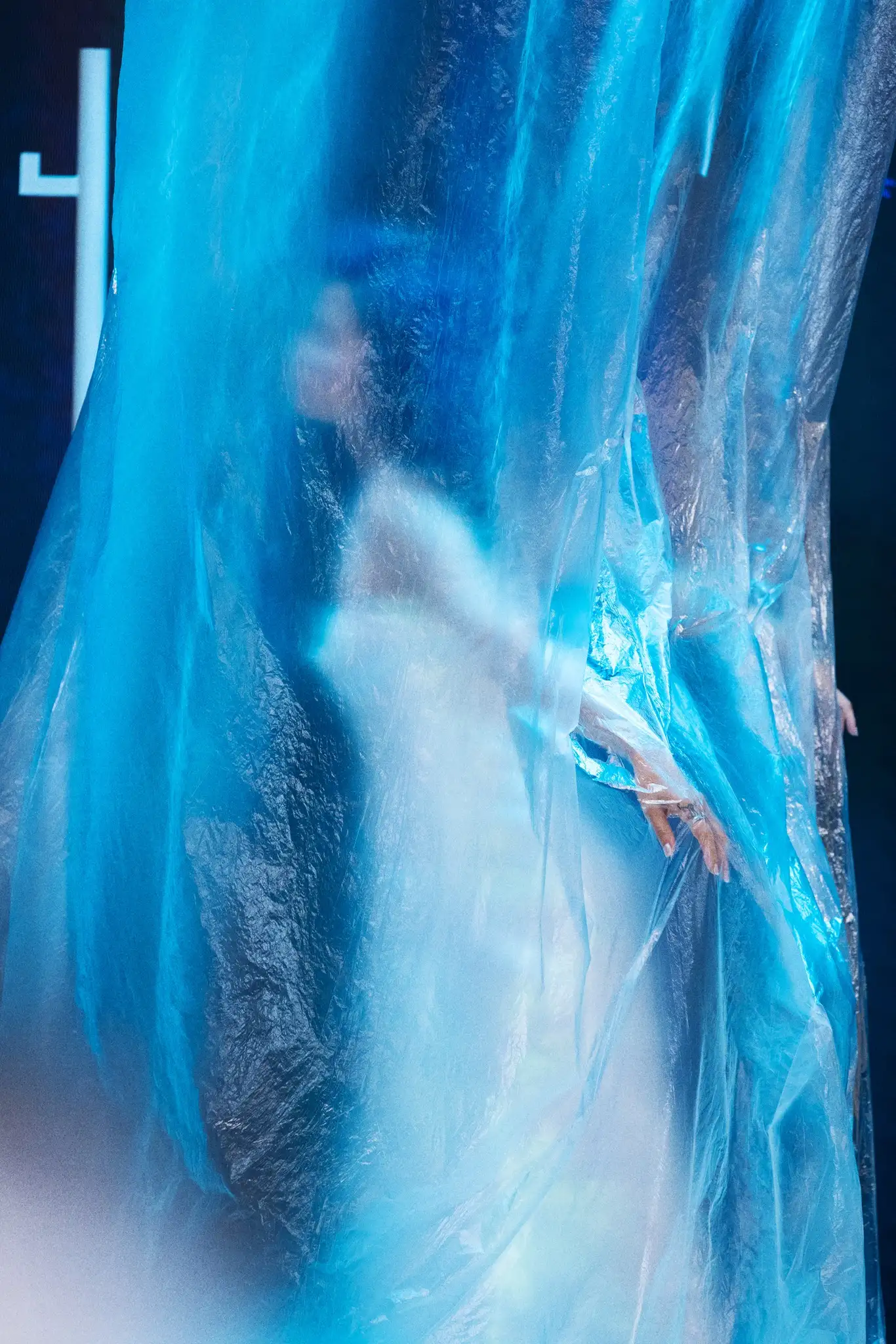
Do not kill seeds of hope
The conversation between Dương Đỗ and Đồng Lan at LOXO does not aim to determine whether the “spiritual system” or the “business system” is more effective. It simply shows that whether you quietly plant seeds for the future like Lan, or actively establish aesthetic standards for the present like Dương, the ultimate goal remains the same: protecting goodness.
Art, in their worldview, is not a luxury. An ordinary person with bills and daily worries should still learn to appreciate art. It is a filter that upgrades the quality of our decisions. When we understand the value of beauty, we not only make wiser choices, but also invest our time in deeper dimensions. Developing aesthetic taste is essentially cultivating kindness in how we observe the world.
At the end of the dialogue, Đồng Lan leaves a striking reflection: “Killing someone’s hope is an act of cruelty!”
That statement serves as a final reminder: The art and kindness that Dương and Lan pursue are ultimately about nurturing hope. For Lan, it is hope for a younger generation enriched by beauty. For Dương, it is hope for an intellectual class that respects higher aesthetic standards.
Because when we stop believing in beauty, we indirectly extinguish the hope for a more humane society. And perhaps that is the greatest cruelty of all.
Dương Đỗ: If you were a type of weapon, what would you be?
Đồng Lan: I am a weapon of love
Dương Đỗ: If you were a tree, what would you be?
Đồng Lan: A wild orchid. Growing high in the mountains